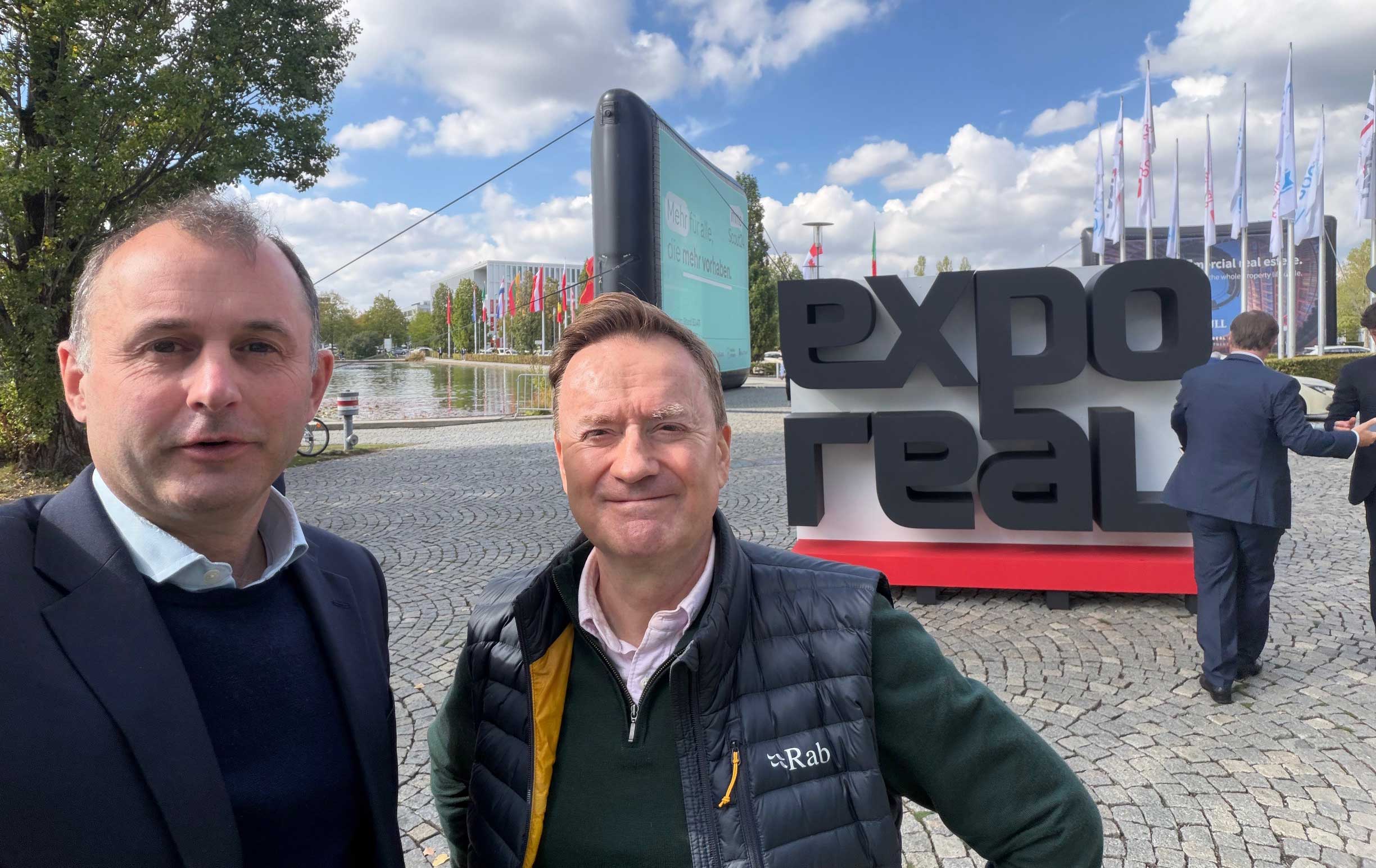
Expo Real 2026: When the language changes
Walking the halls at Expo Real in Munich this week, the mood was notably different from previous years.
Real estate has faced its share of challenges since Covid, but there has usually been a sense that recovery was just around the corner. This year felt different. Conversations were more candid. There was less talk of green shoots and fewer predictions that next year would be better. Instead, there was a growing acceptance that higher interest rates, elevated bond yields and valuation pressure could be with us for some time.
One quote in Green Street News’s Expo Real round-up summed it up well. A fund manager remarked that, for the first time since 2020, people were “finally looking the beast in the eye”. That felt like a fair description of what was happening.
What’s particularly interesting, though, is how the language of the market has changed.
For years, communication in the sector was built around growth. Acquisitions, development pipelines, fundraising and rising values dominated the conversation. Being active was seen as a sign of strength. Waiting on the sidelines often required an explanation. Not anymore.
A manager that hasn’t acquired anything for a year or two may no longer be viewed as inactive. It may be viewed as disciplined. If refinancing pressure creates the wave of distressed opportunities many expect, preserving capital and waiting for the right moment could prove to have been the right strategy all along.
That’s why the language will change. Investors will talk about keeping their powder dry. Fund managers will emphasise patience, selectivity and liquidity. The conversation will shift from activity to preparedness.
The industry’s dark humour tells a story of its own. Since Covid, every difficult year seemed to come with a slogan suggesting better times were just ahead. This year, one delegate joked that after “survive till ’25” and various versions for 2026, the new mantra is “sturdy till 2030”.
There is an uncomfortable truth behind it – the market no longer seems convinced that relief is just around the corner.
That reality creates a different communications challenge.
When markets are difficult, the instinct is often to go quiet. But silence rarely inspires confidence. Investors, lenders and occupiers will form a view regardless. The strongest businesses are not pretending everything is fine. They are explaining why they are prepared. They talk about available capital, strong balance sheets, limited refinancing risk and, increasingly, the absence of legacy issues.
In other words, they are looking the beast in the eye.
And in a difficult market, that may be the most powerful message of all.